
Lashkar-e-Tayiba operative Abu Jindal, who was arrested in Delhi on Monday, was once called Syed Zabiuddin Syed Zakiuddin Ansari, according to police records. He was a member of the Students Islamic Movement of India in the 1990s and was known simply as Ansari. He was given the alias of Abu Jundal after he joined Lashkar.
The various transcripts and telephonic conversations between the handlers and the attackers, which are in possession with the Mumbai police and the Intelligence Bureau, point out to the role of Syed Zabiuddin in the attacks.
30-year-old Jundal, who has been confronted with Ajmal Kasab -- the lone surviving Lashker terrorist in the Mumbai terror attacks, was produced before a metropolitan magistrate in his chamber, official sources said. Besides the two, a court clerk was also present during the proceedings.
Maharashtra Home Minister R R Patil on Friday said in the legislative assembly that records did not show that terror suspect Syed Zabiuddin Ansari alias Abu Jundal, arrested last month in Delhi, had stayed in the MLA hostel rooms of state Minister Fauzia Khan in 2006.
India will give Pakistan a dossier on LeT terrorist Syed Zabiuddin Ansari, alias Abu Jundal, during Indo-Pak Foreign Secretary-level talks in New Delhi on Wednesday including the passport issued by Pakistan indicating the involvement of state agencies of that country.
How did Syed Zabiuddin Ansari from Beed, son of an insurance agent and an aspiring electrician, become dreaded terrorist Abu Jundal?

A local court in Mumbai ordered that 26/11 handler Abu Jundal, in custody of Maharashtra police, be produced before Tees Hazari court in Delhi on Thursday in a case of conspiring to carry out terror attacks in India.

Dhurandhar's most dangerous idea is that Director Aditya Dhar envisions an Indian state run by a deep state -- an intelligence machinery not accountable to Parliament, courts, or voters. A future political system where unelected officials decide when Indian democracy is 'fit' to function, observes Syed Firdaus Ashraf.
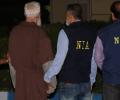
Tahawwur Hussain Rana, a key accused in the 26/11 Mumbai terror attacks, was brought to India on Thursday after being "successfully extradited " from the US, the National Investigation Agency (NIA) said. The 64-year-old Canadian citizen of Pakistani origin landed in Delhi in a special plane on Thursday evening, ending days of speculation of when and how he will be extradited, officials said. The NIA said in a statement that it had secured the successful extradition after years of sustained and concerted efforts to bring to justice the key conspirator behind the 2008 mayhem that claimed 166 lives. Rana is accused of conspiring with David Coleman Headley alias Daood Gilani, and operatives of designated terrorist organisations Lashkar-e-Taiba (LeT) and Harkat-ul-Jihadi Islami (HUJI) along with other Pakistan-based co-conspirators, to carry out the the three-day terror siege of India's financial capital.

As he basks in glory after a string of arrests of several wanted terrorists during his tenure, Home Minister Sushilkumar Shinde said underworld don and India's most wanted fugitive Dawood Ibrahim will be also brought back to India to face justice.

Proceedings related to terror masterminds Yasin Bhatkal and Abdul Karim Tunda in 2013 hogged the limelight in Delhi courts, which brought down the curtains in the Batla House encounter case by giving life term to a suspected terrorist of the Indian Mujahideen module.
